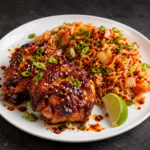
Glazed Chicken Thighs with Kimchi Fried Rice
Crispy chicken thighs coated in a sweet, savory, spicy gochujang-kimchi-inspired glaze and served over bold kimchi fried rice.
Servings: 6
Ingredients
- 4 6 bone-in skin-on chicken thighs
- 1 tablespoon cornstarch
- 1 teaspoon adobo seasoning or ½ tsp garlic powder + ½ tsp onion powder + pinch of salt
- 1 tablespoon gochujang Korean fermented chili paste
- 1 teaspoon miso paste white or red
- 2 cloves garlic minced
- 1 teaspoon fresh ginger minced or ½ teaspoon ground ginger
- 1 teaspoon sesame oil
- 1 tablespoon soy sauce regular or low-sodium
- 1 tablespoon honey
- 2 tablespoons water plus more as needed
- As needed neutral oil for searing
Kimchi Fried Rice
- 1½ cups cooked long-grain rice cold day-old rice preferred
- 1 small onion diced
- 1 clove garlic minced
- ½ cup kimchi chopped plus a splash of kimchi juice
- 1 teaspoon sesame oil optional
- 1 teaspoon soy sauce optional to taste
- ½ lime fresh juice for serving
- As desired chili crisp or crushed red pepper for garnish
- As desired green onions sliced optional garnish
Instructions
- Prep the chicken. Pat the chicken thighs very dry with paper towels. Combine the cornstarch and adobo seasoning in a shallow dish, then lightly coat the chicken on all sides.
- Make the glaze. Whisk together the gochujang, miso, garlic, ginger, sesame oil, soy sauce, honey, and water until smooth. Set aside.
- Sear the chicken. Heat a thin layer of neutral oil in a large skillet over medium to medium-high heat. Add the thighs skin-side down without crowding the pan. Sear until the skin is deeply golden and crisp, about 5–7 minutes. Flip and cook another 4–5 minutes.
- Finish cooking safely. Reduce the heat as needed and continue cooking until the thickest part of each thigh reaches at least 165°F (74°C), avoiding the bone when checking temperature. Transfer the chicken to a plate. If the thighs are especially large, they may require additional covered skillet time or a short finish in a 400°F oven.
- Build the glaze. Carefully remove excess fat from the skillet, leaving the flavorful browned fond. Reduce heat to medium-low. Add the prepared glaze and scrape up the fond. Simmer gently for 1–2 minutes. Add water ½ tablespoon at a time if the glaze becomes too thick.
- Glaze the chicken. Return the fully cooked chicken thighs to the skillet and turn them in the sauce until coated. Cook briefly, about 1–2 minutes, just until the glaze clings to the chicken and becomes glossy. Watch carefully because the honey and gochujang can scorch.
- Start the fried rice. Transfer the glazed chicken to a clean plate and keep warm. Wipe out any heavily caramelized sauce if necessary. Add a small amount of oil to the skillet and sauté the diced onion for about 2 minutes. Add the garlic and cook for 30 seconds.
- Add kimchi and rice. Add the chopped kimchi and a splash of kimchi juice. Sauté for 1–2 minutes. Add the cold cooked rice, breaking apart any clumps, and stir-fry until hot and lightly toasted, about 3–4 minutes.
- Season the rice. Season with soy sauce to taste and stir in sesame oil, if using. If you have clean, unused glaze reserved before it touched raw chicken, a small amount may also be added for extra flavor. Do not use sauce that has contacted raw chicken unless it has been thoroughly cooked.
- Plate and serve. Divide the kimchi fried rice among plates and top with the glazed chicken. Finish with fresh lime juice, chili crisp, and sliced green onions, if desired.
Video
Notes
• Bone-in chicken thighs usually need more than 10–13 minutes total cooking time. Use the thermometer—not the clock—to determine doneness.
• For crispier skin, dry the chicken thoroughly and give each thigh enough room in the skillet. Crowding traps steam.
• Cold, day-old rice gives fried rice the best separated texture. Fresh rice can work, but spread it on a tray or plate to cool and release steam before frying.
• Gochujang, miso, soy sauce, kimchi, and chili crisp can all contribute salt. Taste the finished components before adding extra seasoning.
• For a gluten-free version, use certified gluten-free gochujang and miso plus tamari or another gluten-free soy sauce alternative. Check the kimchi, adobo, and chili crisp labels as well.
• Kimchi is traditionally fermented, so flavor, acidity, and saltiness vary by brand. Adjust the rice seasoning to the kimchi you are using.
• For crispier skin, dry the chicken thoroughly and give each thigh enough room in the skillet. Crowding traps steam.
• Cold, day-old rice gives fried rice the best separated texture. Fresh rice can work, but spread it on a tray or plate to cool and release steam before frying.
• Gochujang, miso, soy sauce, kimchi, and chili crisp can all contribute salt. Taste the finished components before adding extra seasoning.
• For a gluten-free version, use certified gluten-free gochujang and miso plus tamari or another gluten-free soy sauce alternative. Check the kimchi, adobo, and chili crisp labels as well.
• Kimchi is traditionally fermented, so flavor, acidity, and saltiness vary by brand. Adjust the rice seasoning to the kimchi you are using.