
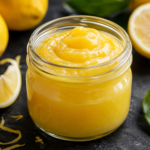
Lemon Curd
Bright, buttery and silky-smooth lemon curd made with fresh lemon juice, egg yolks, sugar and butter. Perfect for scones, pavlova, pancakes, cakes and more.
Servings: 1 cup
Ingredients
- ½ cup fresh lemon juice approximately 3–4 Meyer lemons depending on size and juiciness
- 4 large egg yolks
- ½ cup granulated sugar
- 6 tablespoons unsalted butter chilled and cut into small cubes
- Optional Garnishes
- Fresh lemon zest • powdered sugar • fresh mint leaves
Instructions
- Combine the base. In a stainless-steel saucepan, whisk together the lemon juice, egg yolks and sugar until completely blended and smooth.
- Cook gently. Place the saucepan over low to medium-low heat. Cook while whisking continuously, making sure to reach the bottom and corners of the pan so the egg mixture heats evenly.
- Thicken the curd. Continue cooking for approximately 6–8 minutes, or until the curd thickens enough to coat the back of a spoon. When you draw a finger through the coating, it should leave a clean streak. For greater precision, the curd should reach approximately 170°F (77°C) without boiling.
- Emulsify with butter. Remove the saucepan from the heat. Add the chilled butter a few cubes at a time, whisking until each addition is fully melted and incorporated before adding more. Continue until the curd is glossy and smooth.
- Strain, if desired. For an extra-silky finish, immediately pass the warm curd through a fine-mesh strainer into a clean bowl or container.
- Cover the surface. Press plastic wrap directly against the surface of the curd. This prevents a skin from forming as it cools.
- Cool and chill. Cool briefly, then refrigerate until thoroughly chilled and set, approximately 1–2 hours.
- Serve. Use the chilled lemon curd on scones, toast, pancakes, cakes or pavlova. Garnish with lemon zest, powdered sugar or fresh mint, if desired.
Video
Notes
• Low, controlled heat is the key to smooth lemon curd. High heat can scramble the egg yolks before the mixture has time to thicken evenly.
• Keep the whisk moving and pay special attention to the bottom and corners of the saucepan.
• The curd will continue to thicken as it chills, so do not wait for it to become refrigerator-thick while it is still on the stove.
• Adding cold butter off the heat creates a smooth emulsion and gives the finished curd its glossy, luxurious texture.
• Meyer lemons are naturally sweeter and less sharply acidic than standard lemons. If using regular lemons, expect a brighter, more tart curd.
• Save the egg whites. They are perfect for making pavlova, which pairs beautifully with this lemon curd.
Storage
Transfer the finished curd to a clean airtight container and refrigerate promptly. For best quality, use within about 1 week. Always use a clean utensil when serving.
• Keep the whisk moving and pay special attention to the bottom and corners of the saucepan.
• The curd will continue to thicken as it chills, so do not wait for it to become refrigerator-thick while it is still on the stove.
• Adding cold butter off the heat creates a smooth emulsion and gives the finished curd its glossy, luxurious texture.
• Meyer lemons are naturally sweeter and less sharply acidic than standard lemons. If using regular lemons, expect a brighter, more tart curd.
• Save the egg whites. They are perfect for making pavlova, which pairs beautifully with this lemon curd.
Storage
Transfer the finished curd to a clean airtight container and refrigerate promptly. For best quality, use within about 1 week. Always use a clean utensil when serving.